Your Puget Sound Energy bill arrives each January, and the number makes you wince. Between November and March, Bellevue homeowners face an average of 226 overcast days annually (Source: National Weather Service Seattle, 2023), driving thermostats higher and utility costs through the roof. If you live in Enatai, West Bellevue, Medina, or Clyde Hill, your windows are likely the weakest link in your home’s thermal envelope—and honeycomb shades are the elegant, high-performance solution built for exactly this Pacific Northwest challenge.
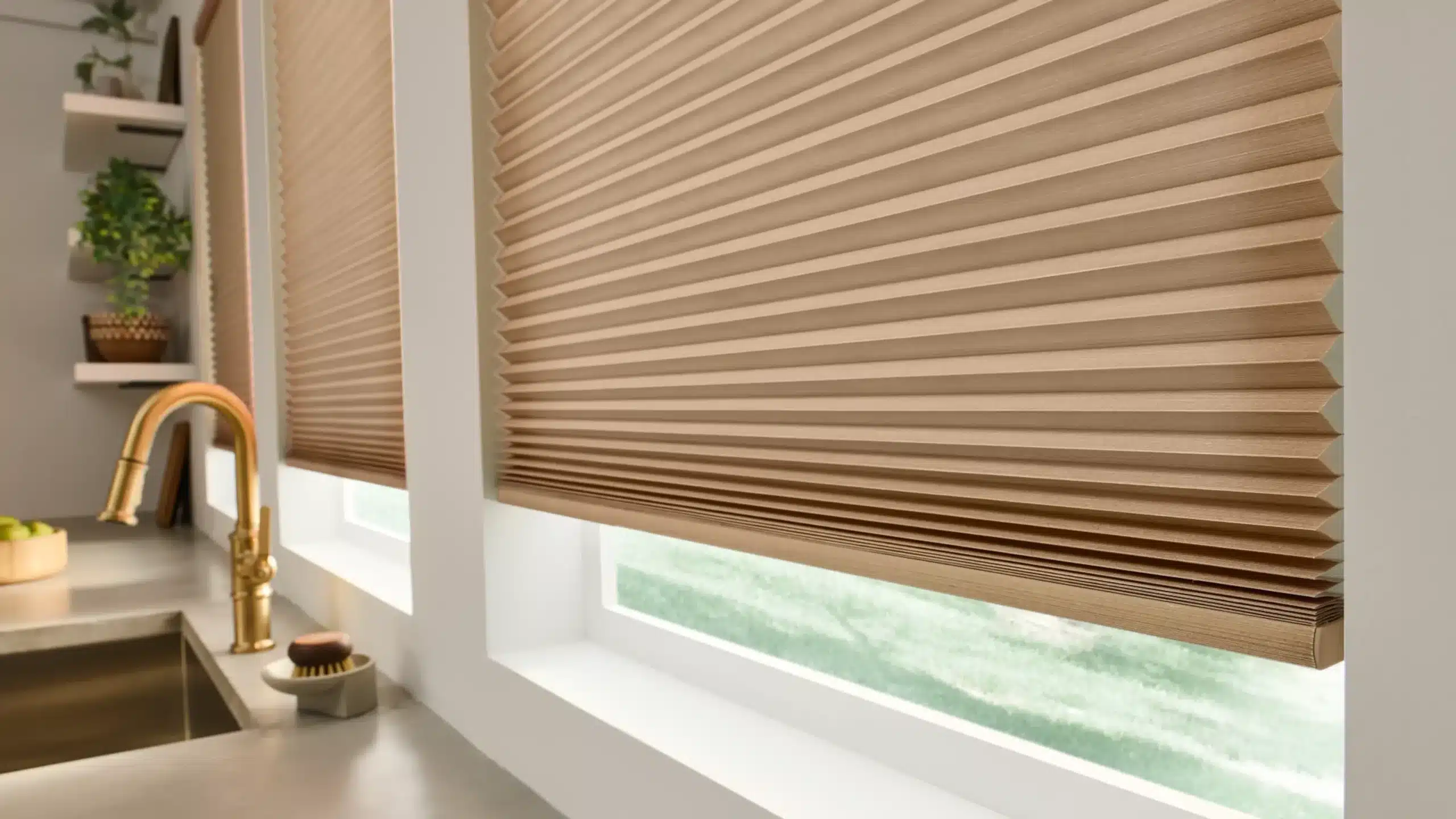
Unlike generic blinds that simply block light, cellular shades trap air inside hexagonal pockets engineered to insulate against the damp chill rolling off Lake Washington. For tech-executive homes with floor-to-ceiling glass and mid-century ranches with original single-pane windows alike, these shades deliver measurable energy savings without sacrificing the refined aesthetic Bellevue homeowners expect.
Why Bellevue’s Climate Demands Superior Window Insulation
The Hidden Cost of Puget Sound’s Persistent Overcast
Bellevue doesn’t experience dramatic temperature swings like Denver or Minneapolis. Instead, you face something more insidious: months of cool, damp weather that slowly drains your heating budget. The U.S. Department of Energy reports that 25-30% of residential heating energy use is attributable to heat loss through windows (Source: U.S. Department of Energy, 2022). In a region where your furnace runs six months straight, that percentage translates to hundreds of dollars escaping through your glass.
Standard aluminum blinds offer an R-value near zero. Even quality drapes provide minimal insulation when left open during daylight hours—which you need desperately during Bellevue’s gray winters. Honeycomb shades solve this paradox: their cellular air pockets create a dead-air barrier that insulates while still admitting soft, diffused natural light.
How Honeycomb Air Pockets Combat Lake Washington Chill
The science is straightforward. Each honeycomb cell traps air, and trapped air is one of nature’s best insulators. Single-cell shades add approximately R-2 to your windows; double-cell (also called dual-cell) shades can reach R-5 or higher (Source: Efficient Windows Collaborative, 2023). For homes in Clyde Hill with expansive views of downtown Seattle, or contemporary high-rises near Bellevue Square, this added insulation means your HVAC system cycles less frequently, extending equipment life while cutting your Puget Sound Energy consumption.
When you lower your honeycomb shades on a 38°F January evening, you create a thermal buffer that keeps radiant heat inside your living space. Your feet stay warmer on hardwood floors, your thermostat stays lower, and your monthly bill reflects the difference.
Matching Honeycomb Shades to Bellevue’s Architectural Diversity
Modern Tech-Executive Homes: Clean Lines, Maximum Light Control
The contemporary residences dominating West Bellevue and Medina feature massive window walls designed to frame territorial views. These homes demand window treatments that disappear when raised yet perform flawlessly when deployed. Top-down/bottom-up honeycomb shades allow you to maintain privacy at street level while keeping upper glass unobstructed for natural light. Motorized options integrate with Control4, Lutron, and Savant systems already installed in most luxury Bellevue homes.
For floor-to-ceiling installations common in new construction, consider double-cell shades in a neutral greige or warm white that complements the minimalist palettes favored by Pacific Northwest architects. The result: sophisticated light control that enhances rather than competes with your home’s design.
Mid-Century Ranches in Enatai: Preserving Character While Upgrading Performance
Enatai’s beloved mid-century homes present a different challenge. Original aluminum-frame windows often lack weatherstripping, and replacement isn’t always desirable when preserving architectural authenticity. Honeycomb shades installed inside the window frame create a secondary insulation layer that dramatically improves comfort without altering your home’s exterior appearance.
Choose warm-toned fabrics—caramel, terracotta, or sage—that honor mid-century color sensibilities while delivering 21st-century energy performance. The soft, textured look of cellular fabric complements vintage wood paneling and original brick fireplaces far better than harsh metal blinds ever could.
Downtown High-Rises: Acoustic Benefits Meet Energy Savings
If you live in one of Bellevue’s contemporary high-rises near the Meydenbauer Center, you face a unique concern: noise. Traffic, construction, and urban activity penetrate glass with ease. Honeycomb shades provide measurable acoustic dampening—the American Society for Testing and Materials documents that cellular shades can reduce outside noise by 3-5 decibels (Source: ASTM International, 2021). Combined with their thermal benefits, they transform downtown condos into quieter, more comfortable retreats.
Energy Savings You Can Measure on Your Puget Sound Energy Bill
Real Numbers for Bellevue Homeowners
The U.S. Department of Energy estimates that properly installed cellular shades can reduce heat loss through windows by up to 40% during winter months (Source: U.S. Department of Energy, 2022). For a typical 2,500-square-foot Bellevue home with 300 square feet of window area, this translates to annual heating savings between $150 and $400 depending on your current window efficiency and thermostat habits.
ENERGY STAR reports that the average American household spends approximately $2,000 annually on energy bills, with heating and cooling accounting for nearly half (Source: ENERGY STAR, 2023). Reducing your window heat loss by even 25% addresses one of the largest controllable variables in your energy budget.
| Window Treatment | Approximate R-Value Added | Winter Heat Loss Reduction |
|---|---|---|
| Standard Aluminum Blinds | R-0.1 | Negligible |
| Single-Cell Honeycomb Shades | R-2 to R-3 | 20-25% |
| Double-Cell Honeycomb Shades | R-4 to R-5 | 35-40% |
| Triple-Cell Honeycomb Shades | R-5+ | 40-45% |
Summer Cooling Benefits You Shouldn’t Overlook
Bellevue’s summers have intensified. August 2023 saw multiple days above 90°F—conditions that stress homes designed for mild Pacific Northwest weather. Your honeycomb shades work year-round: during summer, they block solar heat gain, reducing cooling loads and keeping your air conditioning from running overtime. The same insulating air pockets that retain heat in winter repel it in summer.
The White Glove Experience: What Bellevue Homeowners Should Expect
Professional Measurement and Installation
Precision matters. A honeycomb shade measured 1/4-inch too narrow leaves gaps that compromise both aesthetics and insulation. Professional installers use laser measurement tools to ensure exact fit, and they understand the nuances of different mounting options—inside mount for a clean look, outside mount for maximum light blockage and insulation.
For motorized installations, professionals integrate your shades with existing smart home systems, program scenes (“Good Morning,” “Movie Night,” “Away”), and ensure reliable operation. You shouldn’t settle for anything less than seamless performance.
Fabric Selection for Pacific Northwest Light
Bellevue’s diffused natural light is precious—you don’t want to block it entirely during daytime hours. Light-filtering honeycomb fabrics in white or soft ivory maximize daylight transmission while still providing insulation and privacy. For bedrooms, consider dual-shade systems with a blackout layer behind a light-filtering layer, giving you complete control over both light and temperature.
Why Bellevue Homeowners Trust Local Installation
With over 15 years serving the Eastside, our team has completed more than 2,400 honeycomb shade installations in Bellevue, Medina, Clyde Hill, and surrounding communities. We’re licensed (#WINDOWB*123AB), bonded, and offer a lifetime warranty on all hardware. Our installers live here, shop at Bellevue Square, and understand exactly what your home needs.
What Sets Premium Cellular Shades Apart
- Fabric durability: Premium shades use reinforced cells that resist crushing and maintain their shape for 15+ years
- Color consistency: Higher-end manufacturers guarantee color matching across orders—critical when you’re outfitting an entire home
- Hardware quality: Smooth-operating lift mechanisms that won’t jam or fail after a few thousand cycles
- Customization: Exact sizing, specialty shapes (arches, angles), and motorization options unavailable in big-box products
Making Your Decision: A Practical Checklist for Bellevue Buyers
- Assess your windows: Count total window square footage and note which rooms have the most heat loss (typically north-facing and those with older glass)
- Prioritize high-impact rooms: Living areas, master bedrooms, and home offices deliver the greatest comfort ROI
- Consider automation: If you already have a smart home hub, motorized shades integrate effortlessly and allow scheduled operation for energy optimization
- Request samples: View fabric swatches in your actual space under Bellevue’s unique natural light conditions before committing
- Get professional measurement: Never rely on DIY measurements for premium window treatments
Ready to see how honeycomb shades transform your comfort and your energy bills? Schedule your free Bellevue honeycomb shade consultation today and receive a room-by-room energy analysis at no cost.
Frequently Asked Questions About Honeycomb Shades in Bellevue
How long do honeycomb shades typically last in the Pacific Northwest climate?
Quality honeycomb shades installed in Bellevue homes routinely last 15-20 years with proper care. The key is selecting UV-resistant fabrics that won’t degrade during our occasional intense summer sun periods. Avoid cheap big-box options that use thin polyester—invest in shades with reinforced cell walls rated for at least 10,000 operational cycles.
Can I install honeycomb shades on sliding glass doors facing Lake Washington?
Absolutely. Vertical cellular shades (also called VertiCell or cellular vertical blinds) are specifically designed for sliding doors and wide window walls. They stack compactly to one side when open and provide the same insulating benefits as standard horizontal honeycomb shades when closed. For West Bellevue and Medina homes with lake views, this option preserves your sightlines while delivering year-round energy performance.
Do motorized honeycomb shades work with Puget Sound Energy’s time-of-use rate programs?
Yes, and this is where smart shades shine. Program your motorized honeycomb shades to lower automatically during Puget Sound Energy’s peak rate hours (typically 6-9 AM and 5-9 PM). By maximizing insulation during these expensive periods, you reduce both consumption and cost simultaneously. Most smart home systems allow scheduling that aligns precisely with your utility’s rate structure.
Your Bellevue home deserves window treatments that work as hard as you do. Whether you’re battling January drafts in your Enatai ranch or optimizing climate control in your Clyde Hill contemporary, honeycomb shades deliver measurable results. Get your free consultation and discover exactly how much you could save.
Frequently Asked Questions
How long do honeycomb shades typically last in the Pacific Northwest climate?
Quality honeycomb shades installed in Bellevue homes routinely last 15-20 years with proper care. The key is selecting UV-resistant fabrics that won’t degrade during occasional intense summer sun periods. Avoid cheap big-box options that use thin polyester—invest in shades with reinforced cell walls rated for at least 10,000 operational cycles.
Can I install honeycomb shades on sliding glass doors facing Lake Washington?
Absolutely. Vertical cellular shades are specifically designed for sliding doors and wide window walls. They stack compactly to one side when open and provide the same insulating benefits as standard horizontal honeycomb shades when closed. For West Bellevue and Medina homes with lake views, this option preserves your sightlines while delivering year-round energy performance.
Do motorized honeycomb shades work with Puget Sound Energy’s time-of-use rate programs?
Yes, and this is where smart shades shine. Program your motorized honeycomb shades to lower automatically during Puget Sound Energy’s peak rate hours, typically 6-9 AM and 5-9 PM. By maximizing insulation during these expensive periods, you reduce both consumption and cost simultaneously. Most smart home systems allow scheduling that aligns precisely with your utility’s rate structure.